

Summary:
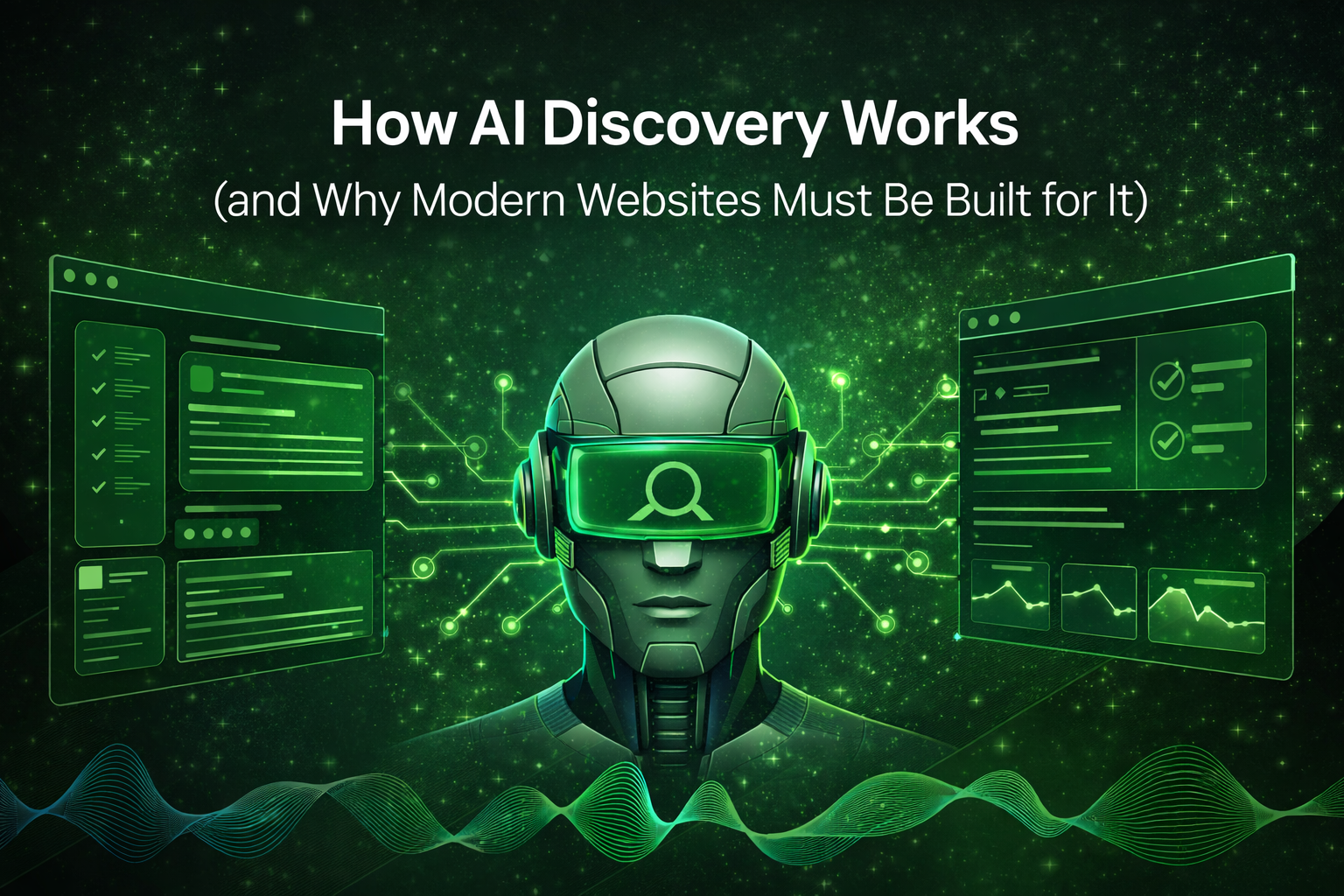
AI discovery is changing how people find businesses online. Instead of relying solely on traditional search rankings, modern AI systems surface answers, recommendations, and trusted sources directly. This article explains how AI discovery works, how it differs from classic SEO, and what businesses must do to ensure their websites are visible, credible, and selectable in an AI-driven search landscape.
Why AI Discovery Matters Now
Search behavior is evolving fast.
Users are no longer just typing keywords into Google and scrolling through ten blue links. They’re asking questions, expecting summaries, and trusting AI-generated answers from platforms like search assistants, smart devices, and large language models.
AI systems don’t “rank” websites the way search engines traditionally do.
They select sources.
That distinction changes everything.
What Is AI Discovery?
AI discovery is the process by which artificial intelligence systems:
- Analyze content across the web
- Evaluate credibility, clarity, and relevance
- Surface trusted sources directly in answers, summaries, and recommendations
Instead of asking:
“Which site is ranked #1?”
AI asks:
“Which source best explains this clearly and reliably?”
If your website isn’t structured for that kind of evaluation, it may never be surfaced — even if it ranks well today.
How AI Systems Choose What to Show
AI discovery relies on several overlapping signals:
1. Clarity of Content
AI favors websites that:
- Clearly explain what they do
- Use plain, unambiguous language
- Avoid vague marketing fluff
If a human can quickly understand your site, an AI model can too.
2. Structured Information
AI systems rely heavily on structure:
- Headings with clear intent
- Logical section flow
- Consistent terminology
- Schema and machine-readable patterns
Unstructured pages confuse AI just as much as they confuse users.
3. Authority & Consistency
AI looks for:
- Consistent messaging across your site
- Supporting content (blogs, guides, explanations)
- Clear topical focus
A website that talks about “everything” often gets selected for nothing.
4. Trust Signals
AI systems evaluate trust indirectly through:
- Real business information
- Clear service descriptions
- Location relevance
- Transparency (about pages, contact info, policies)
Trust is no longer just for humans — it’s for machines too.
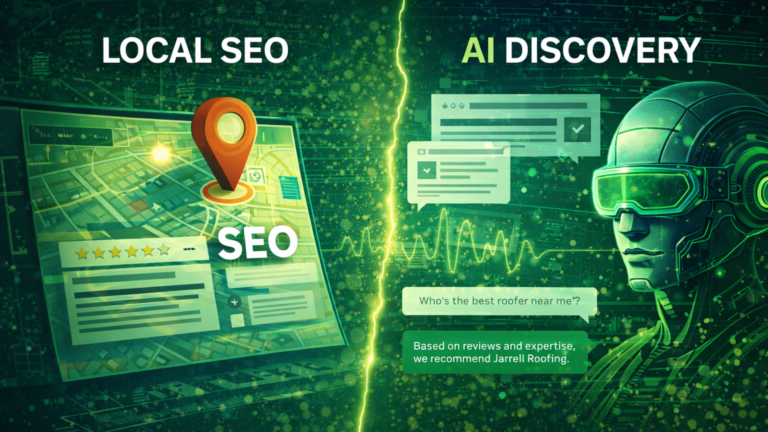
AI Discovery vs Traditional SEO
| Traditional SEO | AI Discovery |
|---|---|
| Keyword-focused | Intent-focused |
| Ranking-based | Selection-based |
| Traffic-first | Answer-first |
| Optimized for search engines | Optimized for understanding |
SEO still matters — but AI discovery builds on top of it, not instead of it.
Think of SEO as getting indexed…
AI discovery is getting chosen.
“AI doesn’t rank websites the way search engines do — it selects the ones it understands and trusts.”
— Kilo Echo Digital
Where GEO (Generative Engine Optimization) Fits In
GEO focuses on optimizing content so it can be:
- Quoted
- Referenced
- Summarized
- Cited by AI systems
This includes:
- Writing in factual, grounded language
- Avoiding exaggerated claims
- Structuring content so answers are extractable
- Reinforcing expertise through depth, not volume
In short: GEO makes your site useful to AI, not just visible.
Why Most Websites Are Not AI-Ready
Most small business websites fail AI discovery because they:
- Prioritize design over clarity
- Use vague marketing language
- Lack supporting educational content
- Treat SEO as a checkbox instead of a system
They look good — but they don’t explain well.
And AI doesn’t guess.
What an AI-Ready Website Actually Includes
An AI-ready website is built with:
- Clear service explanations
- Logical content hierarchy
- Educational blog content that supports core services
- SEO + GEO working together
- Performance and accessibility baked in
This isn’t about chasing trends — it’s about building a site that makes sense to humans and machines alike.
What This Means for Small Businesses
AI discovery levels the playing field.
You don’t need the biggest ad budget — you need:
- Clear messaging
- Strong structure
- Credible content
Businesses that adapt early will be the ones AI systems trust first.
How Kilo Echo Builds for Discovery
We don’t just design websites — we build systems.
Every site we create is structured to:
- Perform well in traditional search
- Be understandable by AI systems
- Support future discovery platforms
- Grow with how people actually search today
AI discovery isn’t coming — it’s already here.
We build for where the web is going, not where it’s been.
Tags:
#AIDiscovery
#GenerativeEngineOptimization
#GEO
#SEO
#AIReadyWebsites
#WebsiteStrategy
#DigitalMarketing
#SearchOptimization
#SmallBusinessGrowth
#KiloEchoDigital


[…] If you want a deeper breakdown, this article explains the mechanics in detail:👉 How AI Discovery Works (And Why Modern Websites Must Be Built for It) https://kiloechodigital.com/how-ai-discovery-works-and-why-modern-websites-must-be-built-for-it/ […]
[…] 👉 How AI Discovery Works (And Why Modern Websites Must Be Built for It)https://kiloechodigital.com/how-ai-discovery-works-and-why-modern-websites-must-be-built-for-it/ […]